
The Ultimate Checklist: 10 Questions to Ask Before Buying a Used Car in the UK
Read about The Ultimate Checklist: 10 Questions to Ask Before Buying a Used Car in the UK on chatMOT
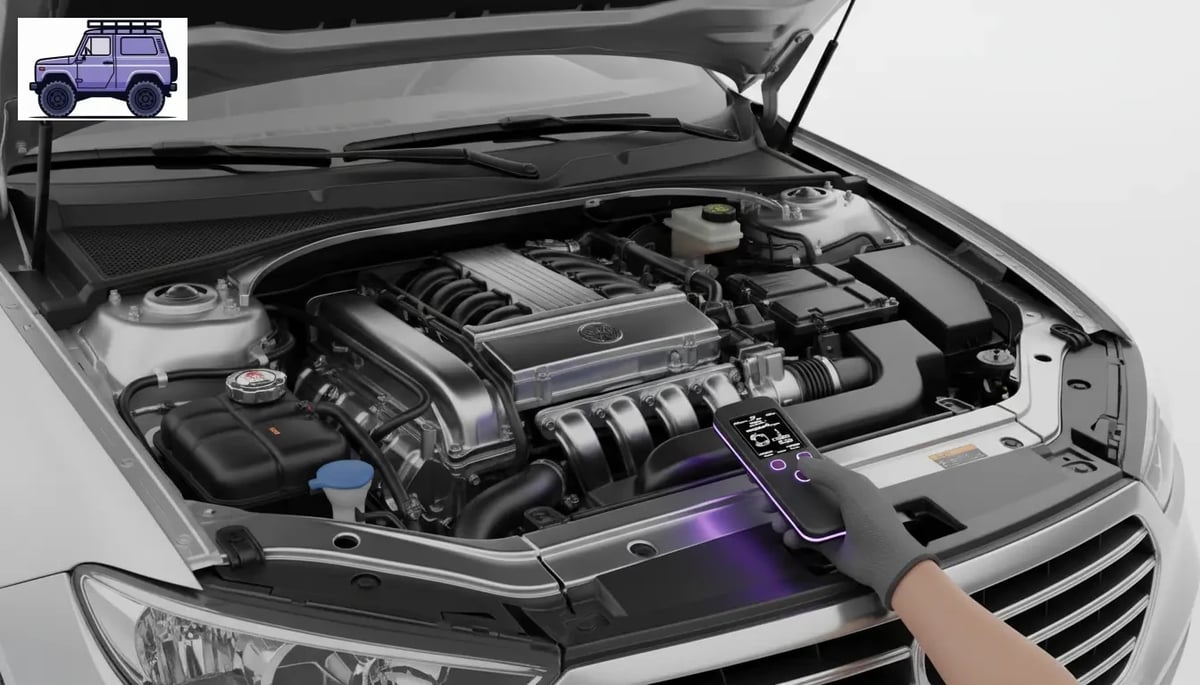
Imagine making what's often the second-largest purchase of your life, only to discover it comes with a hidden problem. Research from the RAC reveals a startling truth: as many as one in four UK used cars has a hidden history, from being stolen or written-off to having outstanding finance. This daunting statistic highlights the inherent risks involved in what should be an exciting acquisition.
This isn't just a number; it represents a significant financial exposure and a potential source of immense stress for buyers. Without a robust strategy, navigating the UK's bustling used car market can easily lead to costly mistakes and profound buyer's remorse. Such a substantial investment demands thorough due diligence to avoid future headaches.
But what if you could transform this potentially risky gamble into a confident, well-informed investment? This guide provides exactly that: a structured, no-nonsense checklist of the ten most critical questions you must ask before handing over your money. Arming yourself with these essential enquiries is your ultimate shield, ensuring you drive away with genuine peace of mind, not a hidden problem.
TL;DR
Make smarter UK used car decisions, faster. This guide empowers you to transform potential risks into informed choices:
- V5C Verification: Check the V5C logbook for registration. GOV.UK notes it's not absolute proof of ownership.
- History Scrutiny: Review service records and free GOV.UK online MOT history for maintenance.
- Test Drive Thoroughly: Drive on varied roads. Listen and feel for issues, a critical step per Reddit users.
- Vehicle History Check: Crucial investment. RAC reports 1 in 4 cars hide finance or accident damage.
- Know Your Rights: Understand your protections, like the Consumer Rights Act 2015, especially from dealers.
- Negotiate Strategically: Use discovered faults as leverage for a better price or value.
Note: Proactive checks prevent future costly surprises and ensure buying confidence.
A prepared buyer asks the right questions, leading to a truly informed purchase.
1. Can I See the V5C Logbook?
Before committing to any used car purchase in the UK, your first crucial step is to request the V5C logbook. This document, officially known as the Vehicle Registration Certificate, transcends mere paperwork; it serves as the car's identity card and a primary defense against fraud. While not absolute proof of ownership, it authoritatively identifies the vehicle's registered keeper (GOV.UK, 2024).
When buying privately, ensure the name and address on the V5C precisely match the seller's identification. A mismatch can be a significant red flag, potentially indicating a dealer posing as a private seller or even a more sinister attempt at fraud (Consumer advice, 2023). Equally important, verify that the Vehicle Identification Number (VIN) printed on the V5C precisely matches the VIN found on the car itself. This is usually visible at the base of the windscreen or on a door pillar, confirming you ackling at the actual vehicle described in the logbook (RAC, 2024).
Note: Always look at section 5, acklingistered Keeper ackling to ensure it corresponds with the person selling you the car. The 'new keeper' slip (V5C/2) is essential for you to tax the vehicle immediately after purchase.
The V5C also details the number of previous keepers. A high turnover in a short period might suggest underlying issues or frequent owner dissatisfaction. Always be wary if the seller is unable to produce the V5C, as it is a mandatory document for the legal transfer of the vehicle.
The V5C logbook is your first and most fundamental check against vehicle misrepresentation and fraud.
2. What Does the Service and MOT History Look Like?
A car's documented history of care, through service records and MOTs, stands as the most reliable predictor of its future performance. Delving into these documents offers invaluable insight into a vehicle's maintenance diligence and helps anticipate potential future costs. It's akin to understanding the car's mechanical autobiography.
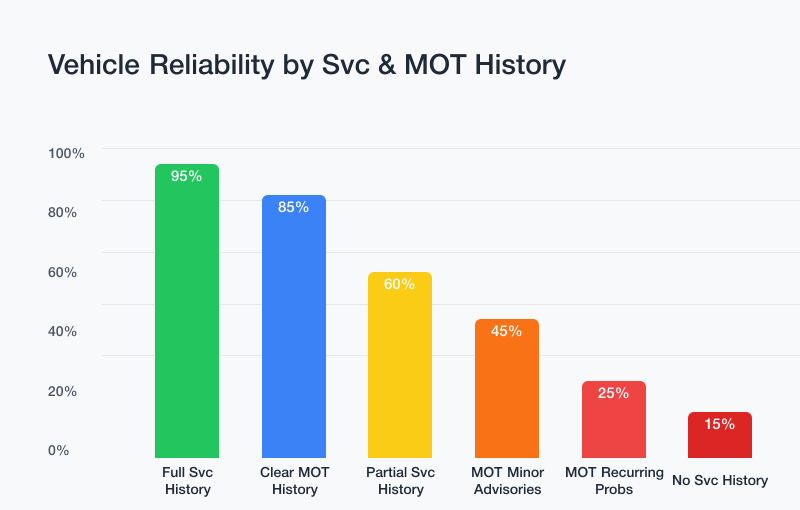
Begin by requesting the physical service book and any accompanying receipts. Look for evidence of regular servicing at recommended intervals, ideally from a main dealer or a reputable independent garage (Carwow, 2023). Gaps in the service history can be a significant red flag, potentially suggesting neglect that could lead to costly problems down the line. Ask the seller for a clear explanation of any missing records; while legitimate reasons can exist, you must be fully satisfied with the explanation.
Next, you must examine the MOT history. This is readily available online and entirely free, with services like ChatMOT simplifying the process:
- Access the GOV.UK Website: Navigate to the official MOT History Check service.
- Enter Registration: Input the car acklings registration number.
- Review Results: Examine past MOT certificates, focusing on pass/fail dates, mileage at the time of test, and any advisories.
While an MOT certificate is not a guarantee of roadworthiness on the day of sale, it provides a crucial snapshot of past issues and advisories (GOV.UK, 2024). Pay close attention to 'advisories,' such as worn tyres or minor corrosion, and observe if these issues were subsequently addressed in future tests. Multiple advisories for the same component can signal a recurring problem. Be particularly cautious if the vehicle's license plate is deliberately obscured in online advertisements; Reddit users frequently advise this can be a tactic to hide a poor MOT history (Reddit, 2023).
A full service history is a major selling point and a strong indicator of a well-maintained, reliable vehicle.
3. Can I Take It for a Comprehensive Test Drive?
A test drive is far more than a mere formality; it represents your singular opportunity to discover how a used car truly performs in real-world conditions. A brief spin around the block is often insufficient to uncover potential issues. If a seller hesitates or flat-out refuses a proper test drive, consider it a significant red flag and be prepared to walk away. This is not merely a suggestion; it is a non-negotiable step in smart car acquisition.
The objective here is to comprehensively evaluate the car's performance under various conditions, identifying mechanical or electrical issues not apparent from a static inspection. Think of it as putting the vehicle through its paces before committing. Chris Fix, a well-regarded automotive expert, consistently highlights the importance of a detailed test drive checklist to spot issues like clutch slip or steering pull, which are crucial indicators of a vehicle acklings overall health.
When you get behind the wheel, focus on several key areas:
On the Road Performance
Your test drive should mirror typical driving scenarios. This means:
- Variety of Surfaces: Drive on different road types, including stop-and-go urban traffic and open roads.
- High-Speed Run: A critical step, as recommended by numerous Reddit threads and RAC's guide, is to take the car onto a dual carriageway or motorway. Get the car up to 60-70mph and maintain that speed for at least 10-15 minutes, as advised by Reddit users. This helps detect issues with engine temperature stability, transmission performance, and steering alignment under load.
- Listen and Feel: Pay meticulous attention to any unusual noises clunks, squeaks, or grinding from the engine, suspension, or brakes. Feel for vibrations through the steering wheel, uneven braking (juddering), or any pulling to one side. Be aware that a seller might warm the car up beforehand to mask cold-start issues; therefore, try to start the car from cold if possible.
Electrical and Comfort Checks
Beyond mechanicals, thoroughly test all electrical components. This includes:
- Air conditioning (ensure both hot and cold settings work effectively).
- Power windows and mirrors.
- The infotainment system, including radio, Bluetooth, and navigation.
- Heated seats, parking sensors, and reversing cameras.
- All interior lights and dashboard warning lights.
Note: Always ensure you are adequately insured for the test drive. Many sellers will have trade insurance, but it's wise to arrange your own temporary insurance for peace of mind, a service readily available from various providers for a small fee.
For families, a comprehensive test drive also extends to practical fitment checks. Bring your car seats to ensure they clip in securely and your pram to verify it fits comfortably in the boot, particularly if boot space is a priority. These small details can significantly impact daily usability.
The test drive is where theory meets reality; never underestimate its power to reveal a car's true condition.
4. Has the Car Been in an Accident or Is There Outstanding Finance?
A staggering one in four used cars carries a hidden history, making a professional vehicle history check not just advisable, but absolutely essential (RAC, 2024). This modest investment is the single most effective way to protect yourself from a five-figure mistake, uncovering critical information the seller might not disclose or even be aware of. Never rely solely on the seller's verbal assurances; always back it up with empirical data.

These comprehensive checks, often referred to as HPI checks, reveal if the car has been recorded as stolen, declared an insurance write-off (categorised as Category S/N for structural or non-structural damage), or, critically, if it has outstanding finance owed. If a vehicle has outstanding finance, it legally belongs to the finance company, not the current seller. This means the finance company could legally repossess the vehicle from you, leaving you out of pocket and without a car (Consumer Rights Act, 2015).
A vehicle history check also verifies the car's mileage against the National Mileage Register, helping to identify potential 'clocking' or mileage discrepancies, which are illegal practices. Alongside this digital investigation, physically inspect the vehicle for tell-tale signs of poor accident repair. Look for mismatched paint colours between panels, uneven panel gaps, or overspray on rubber seals, which can strongly indicate previous structural damage (Carwow, 2023).
Invest in a professional vehicle history check to ensure peace of mind and protect your financial investment.
5. Why Are You Selling the Car?
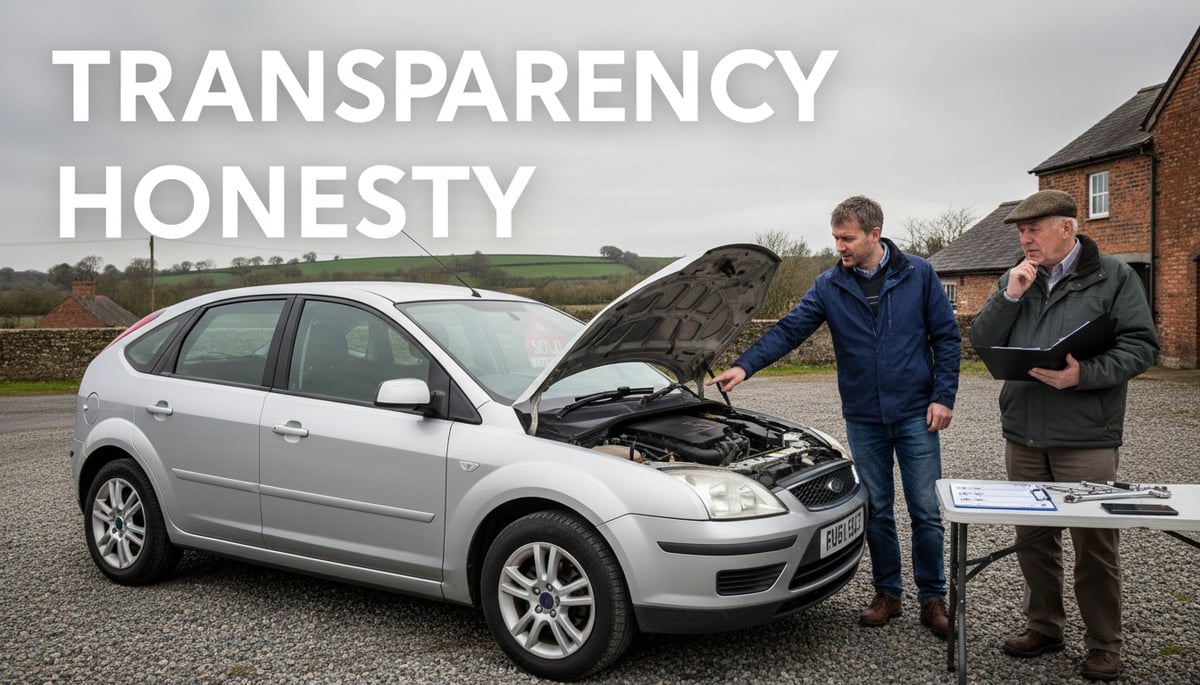
Asking a seller, "Why are you selling the car?" might seem basic, yet it's a surprisingly powerful opener in your quest for a UK used car. This simple, conversational question immediately tests the seller's transparency and can reveal far more than any direct technical query ever could. It's about reading the person, not just the machine.
For private sellers, listen for a credible and straightforward explanation. Answers such as "we need a bigger car for the family" or "I've been given a company car" often indicate a genuine reason for sale. Conversely, vague, defensive, or overly complicated explanations can be a significant red flag, suggesting an attempt to offload a problematic vehicle before an issue surfaces. Similar advice is commonly found in car buying guides, with experienced buyers on forums frequently citing this as a useful 'feel' question (Carwow, Chris Fix).
When dealing with a dealership, rephrase the question to "How did you acquire this vehicle?" Their response (e.g., part-exchange, auction purchase) provides vital context on its background. Understanding the vehicle's journey before it reached the forecourt can hint at its previous life. The seller's answer, regardless of whether it's a private individual or a dealer, naturally provides a lead-in to further questions about the vehicle's reliability and its history. This helps establish a baseline for the seller's honesty from the outset.
This conversational query is a surprisingly potent tool for assessing a seller's transparency and uncovering valuable insights about a vehicle's true condition.
6. Is There Any Major Scheduled Maintenance Due?
The sticker price of a used car is rarely its final cost. Understanding a car's maintenance schedule allows you to accurately forecast its true cost of ownership beyond the initial purchase price, preventing unwelcome financial surprises down the line. This is a critical question for any savvy buyer.
The most critical item to inquire about is often the timing belt (or cambelt). If it fails, the consequences can be catastrophic for the engine, leading to prohibitively expensive repairs. Ask precisely when it was last changed and verify this against the manufacturer's recommended interval, which typically falls around every 5 years or 60,000 to 100,000 miles. Manufacturer service schedules frequently outline these critical intervals (Carwow).
Other significant expenses can include:
- Automatic gearbox fluid changes
- Diesel particulate filter (DPF) servicing
- Major milestone services (e.g., at 60,000 or 100,000 miles)
For Electric Vehicles (EVs), shift your focus to the battery. Ask for a battery health report and clarify the status of its warranty. Reddit discussions on used EVs frequently highlight the critical importance of battery warranty and its impact on long-term ownership. You should factor the cost of any imminent maintenance into your purchase offer. For example, a car requiring a ackling0 cambelt service is inherently worth less than one that has just had it done.
Note: Neglecting a timing belt change can lead to instant, costly repair bills, often exceeding the car's value.
Proactively identifying upcoming major maintenance is essential for accurately calculating the car's true total cost of ownership and avoiding unpleasant financial surprises.
7. What is the Condition of the Tyres and Brakes?
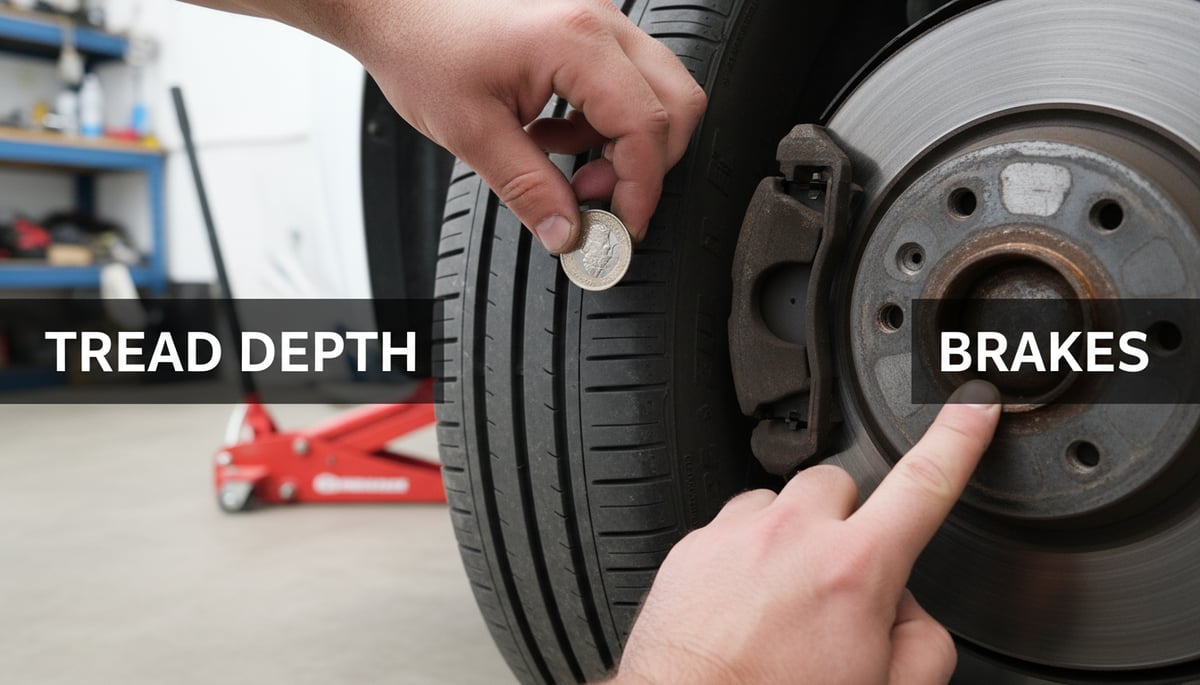
The condition of a car's tyres and brakes provides direct insight into its maintenance history and potential underlying issues, offering immediate indicators of both safety and potential costs. These are hands-on checks that empower any buyer with tangible financial leverage through negotiation.
Begin with the tyres, meticulously checking the tread depth. While the UK legal minimum is 1.6mm across the central three-quarters of the tread, anything below 3mm will likely require replacement soon. A quick and easy way to gauge this is using the 20p coin test: if the outer band of the coin is visible when inserted into the main tread grooves, the tyres are likely below 3mm.
Furthermore:
- Uneven Wear: Look for uneven tyre wear across the tread or between individual tyres, which can indicate underlying alignment or suspension problems.
- Brand Consistency: Ensure all four tyres are from a reputable, matching brand, especially crucial on performance or all-wheel-drive cars. Mismatched or budget tyres can signal cost-cutting in other areas.
- Brake Discs: Inspect the brake discs for heavy scoring, deep grooves, or a prominent 'lip' on the edge, which suggests significant wear. Ask when the pads and discs were last replaced.
The DVSA mandates a 1.6mm legal minimum tread, and comprehensive guides like the RAC's inspection checklist strongly emphasize the importance of these components. During a test drive, any noticeable brake noise or juddering is a major red flag (RAC, Chris Fix). The cost of replacing four premium tyres can be substantial, often ackling0+, thereby turning poor condition into a significant negotiation point.
A thorough inspection of tyres and brakes offers critical insights into a car's safety, maintenance, and potential future negotiation opportunities.
8. What Are My Rights if Something Goes Wrong After Purchase?
Buying a used car is an exciting prospect, but what happens if a fault emerges after you've driven it off the forecourt? Understanding your legal protections is paramount, as they vary significantly based on whether you purchase from a dealer or a private seller. Your rights serve as your ultimate safety net.
When purchasing from a registered dealer, you are robustly protected by the Consumer Rights Act 2015. This powerful legislation mandates that the car must be of 'satisfactory quality', 'fit for purpose', and 'as described'. If a fault appears within 30 days of purchase, you possess a legal right to reject the car for a full refund. Beyond 30 days but within six months, the onus is on the dealer to prove the fault was not present at the time of sale. For faults after six months, you may still have a claim, but you may need to prove the defect existed when you bought it (GOV.UK, Consumer Rights).
Dealers might also offer their own warranty, which operates separately from your statutory rights. Always ask for a detailed breakdown of what this warranty covers, as they are often insurance-backed and may contain exclusions or limits on repair costs. Your Consumer Rights Act protections are typically stronger and broader than a dealer's specific warranty.
In stark contrast, buying from a private seller offers significantly fewer legal safeguards. The principle of caveat emptor acklinguyer beware acklingargely applies. The car simply has to be 'as described' in the advertisement or during your discussions. If the seller has deliberately misrepresented the vehicle's condition, you might have a claim, but proving this can be extremely challenging and often necessitates legal action. It is also illegal under Section 75 of the Road Traffic Act 1988 for anyone, private seller or dealer, to sell an unroadworthy vehicle.
The term "sold as seen" holds no legal weight in a dealer sale, as your statutory rights remain applicable. While commonly used in private sales, it does not absolve a private seller from liability if they have lied or significantly misrepresented the car's condition. For a clearer picture, consider this comparison:
| Feature | From a Dealer (Consumer Rights Act 2015) | From a Private Seller (Caveat Emptor) |
|---|---|---|
| Key Protection | Satisfactory quality, fit for purpose, as described | As described (verbally or in ads) |
| 30-Day Right to Reject | Yes, for a full refund if faulty | No, very limited recourse unless misdescribed |
| 6-Month Fault Rule | Dealer must prove fault wasn't present at sale | Buyer must prove seller deliberately misrepresented |
| Warranty | Statutory rights are separate; dealer warranties supplement | None, unless specified contractually (rare) |
| "Sold as Seen" | No legal standing | Generally understood, but doesn't cover misrepresentation |
Note: Reddit discussions often highlight the difficulties private buyers face, underscoring the importance of thorough pre-purchase checks, as recourse is limited (Reddit, r/LegalAdviceUK). Always clarify what recourse you have before the transaction.
Understanding these distinctions is crucial, as your legal protection hinges significantly on the type of seller.
9. Is the Price Negotiable?

After meticulously inspecting a used car and uncovering its history, your thoughts will naturally turn to the price. Yes, the price is often negotiable, but success isn't about aggressive haggling. It's about leveraging your thorough research and findings to present polite, evidence-based reasons for a revised offer.
Start by thoroughly researching the market value of the specific model, age, mileage, and trim level on reputable sites like Auto Trader. This will arm you with a realistic price range, providing a solid baseline for your expectations (RAC, Used Car Price Guide). Knowing the car's true worth before you even arrive puts you in a strong negotiating position.
During your inspection, make a meticulous note of any issues, no matter how minor. These findings become your strategic negotiation points. Politely articulate concerns like:
- Tyres nearing legal limit: Point out the upcoming expense of replacement.
- Scratches or dents: Mention the cost of cosmetic repairs.
- Upcoming service: Highlight the imminent service cost or MOT expiry.
- Missing service history: Emphasise the uncertainty this creates.
If a dealer is unwilling to reduce the cash price, shift your strategy. Instead of a direct cash discount, ask for value-added extras to be included. This could include a fresh MOT, a full tank of fuel, a complimentary service, or even new floor mats. Many dealers often have more flexibility with added-value items than with outright price cuts (Reddit, r/CarsUK).
Your strongest negotiating tool is always being prepared to confidently walk away. There will always be other cars available, and demonstrating that you are not desperate can encourage a seller to meet your terms. This psychological leverage often proves more effective than any direct argument (RAC, How to Negotiate).
A successful negotiation hinges on being prepared and knowing your value.
10. What Are the Next Steps to Make It Mine?
You've found your ideal UK used car; now for the final, crucial steps. A smooth, legally compliant handover ensures you are fully covered from the moment you take possession of the keys.
- Get a Written Receipt: Always obtain a detailed receipt covering the car's registration, agreed price, mileage, and any promised work. This is your vital proof of purchase.
- Arrange Immediate Insurance: Secure valid car insurance before driving. Driving uninsured is illegal, with severe penalties (RAC, 2024). Activate your policy instantly, often via phone or online at collection.
- Tax the Vehicle Online: Vehicle tax doesn't transfer. The new owner must tax it immediately (GOV.UK, 2024). Use the V5C's 'new keeper' slip (12-digit reference) for instant online taxation. The official DVLA process confirms this legal step before driving.
- Confirm V5C Transfer: The seller notifies the DVLA of the sale. Expect your new V5C registration document within weeks; keep your 'new keeper' slip safe meanwhile.
- Use a Secure Payment Method: An online bank transfer is the safest, most traceable payment. Avoid large cash transactions due to security risks. Always double-check recipient details.
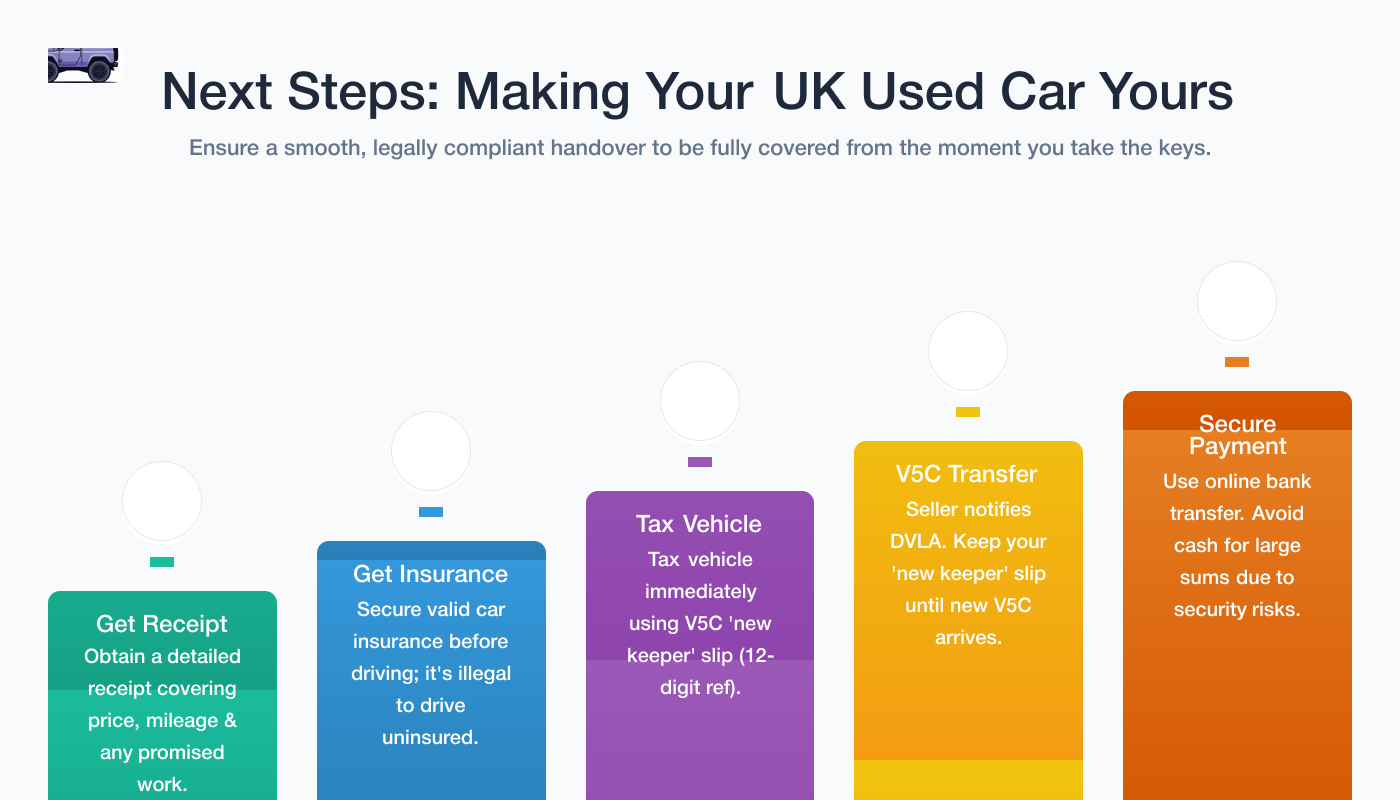
Completing the purchase correctly is as important as choosing the right car, ensuring you are legal from the moment you take the keys.
Navigating the UK used car market can feel daunting, particularly with statistics revealing that a significant number of vehicles carry hidden histories. By diligently applying the ten questions outlined in this guide, you can transform a potentially risky gamble into a confident, well-informed investment.
Here are the key takeaways to ensure a secure used car purchase:
- Verify Identity and History: Always cross-reference the V5C logbook and scrutinise comprehensive service and online MOT histories. This confirms ownership, identity, and reveals critical maintenance patterns.
- Thorough Physical and Digital Checks: Prioritise a comprehensive test drive on varied roads, listening for irregularities. Additionally, invest in a vehicle history check to uncover hidden issues like outstanding finance, accident history, or write-off status.
- Empower Your Negotiation: Understand your legal rights, especially under the Consumer Rights Act 2015 when buying from a dealer. Use any discovered faults or discrepancies as leverage for polite negotiation, ensuring you secure the best possible value.
While the prospect of hidden histories, as highlighted by RAC research, is a genuine concern for buyers, the power to mitigate these risks lies firmly in your hands. Embracing a methodical approach significantly reduces the likelihood of costly mistakes and ensures you drive away with lasting peace of mind.
To empower your decision-making further, consider leveraging comprehensive, data-driven insights from platforms like ChatMOT that consolidate vital vehicle information instantly. This proactive approach not only saves valuable time but provides the undeniable clarity needed to confidently choose a reliable used car, protecting your investment from unforeseen issues.
Tags
Related Articles

Building Authority Before Product-Market Fit: A Founder's Guide

Founder-Led Marketing: A Scalable System for Turning Trust into Revenue