
Success Story: How AI Saved Me from a Lemon Car in the UK
Read about Success Story: How AI Saved Me from a Lemon Car in the UK on chatMOT

Buying a used car in the UK is a notorious gamble. Thousands of drivers fall victim to 'lemon' vehicles — cars that promise freedom but deliver only a cascade of costly repairs and relentless stress.
I was moments away from becoming another statistic, on the verge of making a £5,000 mistake that would have drained my wallet and my peace of mind. But instead of relying on gut instinct or superficial inspections, I engaged a different kind of co-pilot: Artificial Intelligence.
This decision wasn't just clever; it was the essential step that uncovered hidden issues in a seemingly perfect car, ultimately saving me from a financial bullet. This isn't just my story; it's a practical guide demonstrating how AI-powered tools can transform your used car buying experience.
We'll explore the exact digital detectives I used, provide a step-by-step pre-purchase checklist, and show you how data can empower you to make smarter, more confident decisions when purchasing your next vehicle.
My Digital Detective: The AI Tools That Uncovered the Truth
Navigating the used car market in the UK can feel like stepping into a minefield, especially with the persistent worry of landing a 'lemon.' Traditional checks, while essential, often only skim the surface, leaving deeper issues unexposed. My experience with a seemingly perfect car taught me that human intuition and basic history reports aren't always enough to unveil a vehicle's true story. This is where AI stepped in, transforming my car buying journey from a gamble into a calculated, data-driven decision. AI acts as an impartial, data-driven detective, systematically uncovering a vehicle's hidden history and a seller's potential deception where a human buyer might be swayed by emotion.
My journey began with a potential purchase—a sleek, well-advertised car at an incredibly appealing price. Initial checks seemed fine, but a nagging suspicion led me to deploy a suite of AI tools. I understood that while I might miss subtle cues, advanced algorithms were designed to spot anomalies. This proactive approach is gaining traction, with OEMs like Toyota and BMW already using AI for predictive maintenance, identifying potential problems early to enhance vehicle reliability.
Armed with these AI-generated insights, my perspective shifted entirely. The digital detective had systematically dismantled the illusion, revealing a vehicle plagued by underlying issues and a seller potentially trying to capitalize on a buyer's lack of comprehensive information. The peace of mind that comes from such detailed, data-driven validation is invaluable.
Unearthing Hidden Histories with AI-Powered Vehicle Analysis
My first line of defence was an AI-powered vehicle history service. Unlike standard services that merely list pass/fail results, this tool delved deeper into MOT records. It wasn't just about individual failures; it analyzed recurring patterns. For instance, it flagged persistent advisories for brake component wear, suspension bushes, and even minor oil leaks across several years. While each advisory might have been fixed or deemed minor at the time, the AI identified a pattern of neglect or recurring issues that hinted at deeper, systemic problems or poor previous maintenance habits. The system also highlighted a sudden dip in mileage recording accuracy, a subtle indicator that could suggest tampering—something a human might easily overlook. This comprehensive analysis showcases how AI detects patterns and anomalies in vehicle history that human observation often overlooks, providing crucial foresight for buyers.
Decoding Seller Intent: The LLM Advantage
Next, I turned to a Large Language Model (LLM) to scrutinize the seller's communication. I fed the seller's initial advertisement, all email exchanges, and text messages into the LLM. My prompt was specific: 'Analyze these communications for inconsistencies, high-pressure sales tactics, evasive language, or any attempts to downplay vehicle faults.' The LLM promptly highlighted several red flags. It identified instances where the seller’s claims about the car's condition ('immaculate, no known faults') subtly contradicted earlier, more vague statements about recent 'minor work.' More tellingly, it pinpointed phrases like 'another buyer is interested tomorrow' and 'price firm, very popular model,' which, when aggregated, indicated classic high-pressure sales tactics. The LLM's ability to identify aggregated pressure tactics and subtle contradictions in seller communication proved invaluable in exposing potential deception.
The Visual Audit: AI's Eye for Detail
Images can be deceiving, but AI has a keen eye. I uploaded all provided photographs of the car into an image analysis tool. This wasn't just about checking for Photoshop; the AI scanned for subtle signs that would be nearly impossible for the human eye to detect from a compressed JPEG. It looked for variations in paint texture or reflections that suggested mismatched paint or hidden bodywork repairs. Panel gaps, often tell-tale signs of accident damage, were precisely measured and compared against OEM specifications. The tool even identified minute rust bubbles forming in inconspicuous areas near wheel arches and under seals that the seller's artful photography had obscured. For example, it pinpointed a faint ripple on the passenger door, invisible to me, which indicated previous filler work. The AI's ability to precisely measure panel gaps and identify minute imperfections like rust bubbles or faint ripples from previous repairs provides an unrivalled layer of visual scrutiny.
The Price Discrepancy: More Than Just a Bargain
Finally, the pricing tool proved critical. While the advertised price seemed a 'great deal,' the AI pricing tool cross-referenced it with real-time market data, factoring in the specific make, model, year, trim, and, critically, the issues flagged by the other AI tools. It swiftly identified the price as suspiciously low for a car of its stated condition. The tool indicated that for a vehicle with similar mileage and age without the identified patterns of maintenance issues or hidden repairs, the price should have been 15-20% higher. This validated my suspicions, turning a 'bargain' into a clear warning. Ultimately, the AI pricing tool served as a critical safeguard, turning a 'bargain' into a clear warning and validating suspicions of an artificially deflated or inflated value.
Your AI Pre-Purchase Checklist: A Step-by-Step Guide
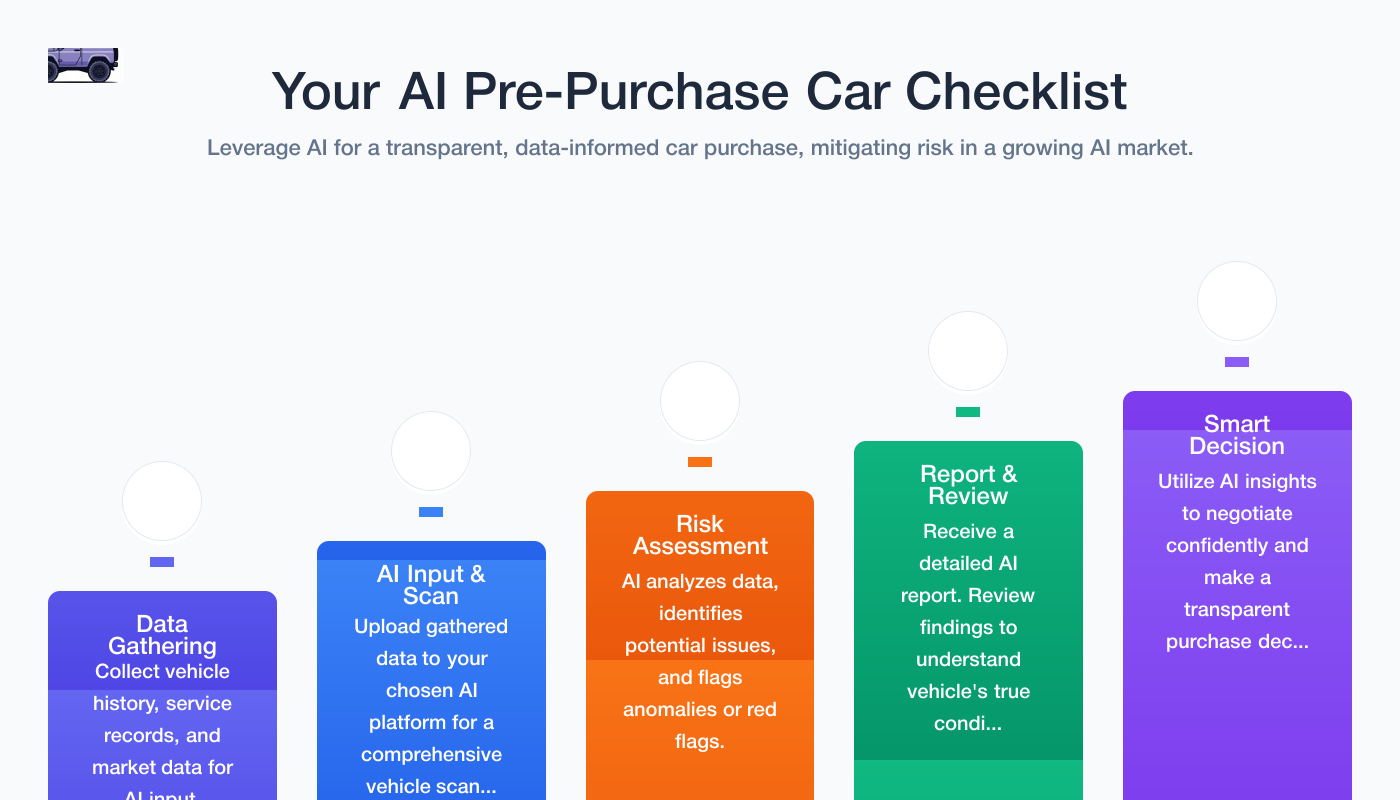
The narrative of uncovering a lemon car with AI isn't just a story; it's a blueprint. In an automotive market increasingly reliant on complex data, buyers need robust tools to level the playing field. By following a systematic AI-driven checklist, any buyer can mitigate risk and transform a potentially biased transaction into a transparent, data-informed decision. This guide empowers you to replicate this success, turning potential uncertainty into clear, actionable intelligence. The UK automotive AI market is forecast to grow from $474.7 million in 2023 to $2.2 billion by 2030, reflecting the increasing integration of AI into vehicle analysis and purchasing.
Here’s your comprehensive, step-by-step guide to using AI for your next car purchase:
Step 1: Gather Your Data
Before any AI tool can work its magic, it needs information. This step is foundational.
- Obtain Core Vehicle Identifiers: Request the vehicle's full license plate (registration number), the Vehicle Identification Number (VIN) found on the V5C document or on the car itself (often windscreen or door jamb), and confirm the full model, make, and year.
- Collect Seller Communications: Save every piece of interaction—the original advertisement copy, all email exchanges, WhatsApp messages, or any other digital communication. These are crucial for language analysis.
- Secure High-Resolution Photos: Ask the seller for numerous high-resolution photos, especially of key areas like wheel arches, under the bonnet, dashboard, interior, and any 'minor' damage mentioned. The more visual data, the better for AI analysis.
Note: The V5C (logbook) is critical. Always verify that the name and address on the V5C match the seller's ID. This is a basic fraud prevention step before involving AI.
The thorough collection of these initial data points is foundational for effective AI analysis and sets the stage for accurate insights.
Step 2: The AI History Check
Go beyond basic history reports. Leverage an AI-enhanced service to find patterns and anomalies.
- Run the License Plate/VIN: Use an AI-powered vehicle history service (e.g., one that integrates MOT, DVLA, and insurance write-off data, like ChatM.O.T).
- Focus on Patterns, Not Just Events:
- MOT Advisories: Look for recurring advisories on the same components (e.g., 'tyres worn close to legal limit' annually, 'minor oil leak' repeatedly). This suggests chronic issues or minimal repairs.
- Failure Reasons: Analyze if failures for one part (e.g., suspension arm) are followed by advisories or failures for related parts (e.g., steering rack, other suspension components).
- Mileage Inconsistencies: The AI can flag sudden drops or increases that don't align with typical use, or extended periods with no recorded mileage, which could hint at odometer tampering.
- Ownership History: Look for a high number of previous owners in a short period, which could indicate a problematic vehicle.
This deep dive into history reveals underlying issues that basic checks often miss, providing an unparalleled, data-driven vehicle health score. The UK Government’s AI Regulation White Paper promotes a 'pro-innovation' framework, encouraging sectoral adoption of such advanced tools.
Step 3: The Language Analysis
This is where you unmask potential seller deception.
- Paste Communications into an LLM: Copy the ad text and all seller communications into an AI Large Language Model (like ChatGPT, ClaudeBot, etc.).
- Craft Specific Prompts: Ask the LLM to identify:
- 'Persuasion tactics (e.g., urgency, scarcity, emotional appeals).'
- 'Inconsistencies between statements (e.g., "no issues" vs. "just had a small repair").'
- 'Vague or evasive statements regarding specific questions.'
- 'Any language that downplays known faults or overemphasizes minor positives.'
- 'Sentiment analysis for aggressive or defensive tones.'
- Review the Output: The AI will highlight passages that meet your criteria, providing a structured assessment of the seller's communication style and integrity. Nissan UK boosted customer satisfaction by 25% with AI-powered virtual assistants, demonstrating AI's aptitude for language processing.
Step 4: The Visual Audit
AI image analysis tools provide an objective second opinion on vehicle aesthetics and structural integrity.
- Upload All Photos: Use an AI image analysis tool. Some advanced services offer this, or you can use publicly available ones with specific feature analysis capabilities.
- Targeted Analysis: Instruct the AI to:
- Scan for Mismatched Paint/Texture: Highlight subtle variations in color or surface texture that suggest repainting or body filler.
- Analyze Panel Gaps: Measure uniformity of gaps between body panels. Inconsistent gaps often indicate accident repair.
- Identify Rust/Corrosion: Pinpoint early signs of rust, especially in common problem areas (wheel arches, sills, undercarriage).
- Check for Alterations: Detect any signs of photo editing or enhancement that might conceal defects.
- Reflections and Lighting: Analyze how light reflects off different panels to spot undulations in the bodywork.
This meticulous visual inspection by AI can save you from costly hidden repairs and provides an objective second opinion on vehicle aesthetics and structural integrity. Over 87% of automotive companies are actively using or piloting generative AI, often for visual design and defect detection.
Step 5: The AI Price Check
Finally, ensure you're paying a fair price, considering all factors.
- Input Vehicle Data and AI Findings: Use an AI valuation tool that considers not just make, model, year, and mileage but also integrates the issues flagged by your AI history and visual checks.
- Evaluate Against Real-time Market Trends: The tool should cross-reference against recent sales data for similar vehicles in your region, adjusting for demand and supply.
- Flag 'Too Good to Be True' Deals: If the price is significantly below the AI's valuation for a vehicle with its identified issues, it’s a major red flag, potentially indicating undisclosed problems or even a scam. Conversely, it can confirm if a price is fair given the vehicle’s actual condition.
By integrating vehicle data with AI findings and real-time market trends, this tool ensures you pay a fair price, turning a potential 'bargain' into an informed investment. A Bristol Ford dealership boosted turnover by 18% in 2024 by using AI to align stock with buyer preferences, illustrating how dynamic pricing and valuation tools offer a competitive edge.
By systematically applying these AI tools, you shift from guessing to knowing, giving you substantial leverage. By integrating these AI-driven steps into your car buying process, you gain an unprecedented level of transparency and confidence, transforming a potentially stressful transaction into an informed decision.
The Confrontation: Using Data to Dodge a Financial Bullet

With the extensive AI-generated report in hand, I felt a profound shift in control. The anxiety of potentially buying a damaged car dissipated, replaced by a calm, data-backed confidence. This section brings the personal narrative to a climax, showcasing how hard evidence from AI tools shifts the power dynamic, allowing a buyer to control the narrative and make a safe, logical exit from a potentially fraudulent situation. The 'caveat emptor' principle for private UK car sales places the burden of due diligence squarely on the buyer, making this data crucial.
I arranged a second viewing, this time armed not with a checklist, but with a meticulously compiled report detailing every inconsistency, every pattern, and every subtle visual flaw the AI had unearthed. The seller greeted me with the same confident demeanor, but I was no longer an easily swayed potential buyer.
The Power of Evidence
I began calmly, thanking the seller for their time and expressing my continued interest, but then politely introduced my findings. 'I've had a comprehensive analysis done on the vehicle, and it's flagged a few points I'd appreciate clarity on.' I started with the recurring MOT advisories for the suspension. 'Your advert states "immaculate mechanical condition," yet the AI analysis of the MOT history shows consistent advisories for worn suspension bushes over the last three years, even after passes. Can you explain why these issues seem to persist?'
The shift in the seller's expression was immediate. The confidence faltered, replaced by a subtle defensiveness. They mumbled about 'common wear and tear' and 'minor points that don't affect driving.' I then presented the findings from the language analysis—specifically, the detected high-pressure tactics and the subtle contradictions in their messages. 'Your emails mentioned "no known faults" but also referenced "some minor work recently." My analysis suggests these statements conflict. Could you elaborate on this "minor work"?'
Unraveling the Deception
As I calmly laid out the image analysis findings—the faint ripple indicating body filler, the slight mismatch in paint reflection on one panel, the early rust spots the AI found—the seller became increasingly agitated. Their explanations grew more evasive and less plausible. They tried to dismiss the AI's findings as 'over-analysis' or 'nit-picking,' but the specificity of the data made it impossible to refute without outright denial. 'That's just the light,' they argued about the paint, yet the AI had cross-referenced reflections across multiple images taken in different lighting conditions.
The contrast between my calm, evidence-based questioning and their flustered, anecdotal responses created an undeniable power imbalance. There was no room for emotional manipulation or persuasive sales talk because I had objective data supporting every point. This situation is unfortunately common, with anecdotal evidence showing scammers often try to intimidate sellers into giving money back after a sale, illustrating the emotional pressure buyers can face.
Walking Away with Confidence
The culmination arrived when I referenced the AI pricing tool. 'Given the documented recurring mechanical advisories, the likely bodywork repairs, and the subtle signs of rust, the AI valuation suggests your asking price is significantly inflated for the vehicle's true condition.' This was the final blow. The seller's defensiveness escalated into outright frustration. They could offer no plausible explanations for the myriad issues flagged by the data.
At that moment, the decision was clear. The AI-generated evidence provided the absolute confidence to walk away from the deal without emotion, second-guessing, or regret. There was no lingering doubt, no 'what if.' The digital detective had done its job, illuminating the dark corners of a potentially fraudulent transaction. This stands in stark contrast to scenarios like the Reddit story of a mechanic selling a car without permission, where buyers can fall into legal black holes with little recourse, especially as police can dismiss car disputes as 'civil matters.'
Reflecting on the situation, the potential stress of falling victim to such a scam was immense—months of repair bills, legal battles, and financial loss. Instead, I walked away with my funds intact and a profound appreciation for the power of AI. While a 2024 survey found 67% of UK consumers are concerned about businesses using AI to make decisions that affect them, in this personal context, AI was my advocate, empowering me.
The ability to confront potential deception with irrefutable, data-driven evidence provided an unparalleled sense of empowerment.
The journey to finding a reliable used car in the UK is often fraught with uncertainty, as I nearly discovered first-hand. My experience underscores a pivotal shift in how we can approach this challenge: moving beyond traditional inspections and gut feelings to embrace the power of Artificial Intelligence. By leveraging intelligent tools, I transformed a high-stakes gamble into a data-driven decision, successfully identifying and avoiding a significant financial pitfall.
My story highlights several crucial takeaways for any prospective car buyer:
- AI tools provide an unparalleled ability to analyze vast datasets, revealing historical issues and potential future problems that traditional methods often miss.
- Armed with objective, data-driven insights, buyers can approach sellers with confidence, negotiate from a position of strength, and make truly informed choices.
- In today's complex used car market, integrating AI into your pre-purchase checklist isn't just an advantage; it's a vital safeguard for your investment and peace of mind.
While AI profoundly enhances our ability to scrutinize vehicles, it acts as an indispensable co-pilot, augmenting human judgment rather than replacing it.
As you embark on your next car purchase, consider making advanced AI analysis an integral part of your strategy. Utilizing AI-powered platforms like ChatM.O.T for comprehensive vehicle history checks and risk assessments can equip you with the essential information needed to avoid costly mistakes and secure a dependable vehicle. Embrace this technological advantage to navigate the used car market with unparalleled clarity and confidence.