
Accessing Full MOT History: Beyond the UK Basic Check
Read about Accessing Full MOT History: Beyond the UK Basic Check on chatMOT

Over 30% of vehicles fail their MOT test on the first attempt. Yet, many used car buyers rely solely on a current pass certificate. This is a significant and potentially costly risk.
The free GOV.UK MOT history check is an essential tool. However, it only tells part of the story. To truly understand a vehicle's health and potential future costs, you must look beyond a simple pass/fail.
This guide empowers you to access and interpret a car's full MOT history like a professional, enabling you to spot critical red flags, verify mileage, and make a confident, data-driven purchasing decision, ensuring true peace of mind.
What a Free MOT Check Tells You (And What It Hides)
The annual MOT test is a cornerstone of vehicle safety in the UK. Legally required for most vehicles over three years old, it ensures they meet minimum roadworthiness and environmental standards. For anyone considering a used car purchase, performing a free MOT history check is an essential first step, offering immediate, crucial insights.
The official GOV.UK website provides instant access to a vehicle’s MOT history, requiring only its registration number. This service has maintained records for all tests performed since 2005 (The GOV.UK service, 2024), offering a valuable retrospective. The data revealed includes every pass/fail result, the recorded mileage at each test, and specific reasons for any failures or advisory notices.
However, relying solely on this basic check can be misleading. While a valid MOT certificate confirms a vehicle met minimum standards on a specific day, it offers no guarantee of ongoing mechanical soundness or meticulous maintenance. It can't reveal what happened between tests, like accident repairs or poor servicing. Third-party services often repackage this free data and may collect user information (Research Data, 2024), so always opt for the official source.
Learning to interpret the data, spot subtle red flags, and understand its limitations is what truly protects you from buying a problematic vehicle.
How to Perform a Free MOT History Check: A Step-by-Step Guide
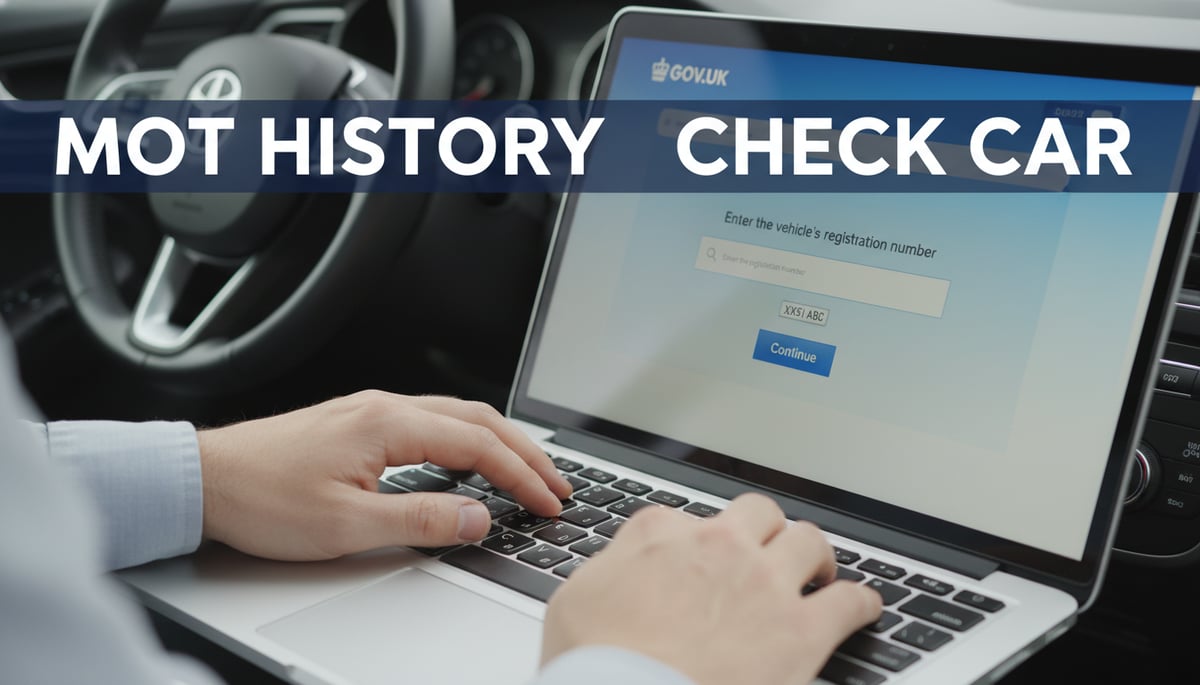
Understanding a vehicle's history starts with accessing reliable data. The government's free MOT history tool is the single source of truth for official MOT data and is straightforward to use. It should always be your primary resource when researching a used car.
Here’s a clear, actionable guide to performing your check:
- Navigate to the Official Website: Open your web browser and go directly to gov.uk/check-mot-history (Research Data, 2024). This ensures you're on the legitimate government portal and not a third-party site.
- Enter Registration Number: Locate the white search field titled "Enter the vehicle's registration number" and type in the car's number plate. Ensure accuracy to retrieve the correct vehicle details.
- Confirm Vehicle Details: After submission, the system will display the vehicle’s make and colour for confirmation (Proof Anchor, 2024). This is a critical step to verify you are looking at the history for the intended car.
- Review the History: The complete MOT history is presented in clear, reverse chronological order. You'll see test dates, pass or fail results, recorded mileage at each test, and the expiry date of the current MOT. The check displays every test date, mileage recorded, pass/fail results, and detailed notes (Research Data, 2024).
For even deeper insight, if you have access to the 11-digit V5C (log book) number, you can enter it to view the location where each MOT test was carried out (Research Data, 2024). This additional detail can sometimes reveal if a car has been consistently tested at the same garage or moved significantly.
The government’s free tool is the single source of truth for MOT data and should be the first and primary resource for any used car buyer or seller.
Decoding the Report: Understanding MOT Defect Categories
Understanding a vehicle's MOT history requires more than a simple pass/fail check. The MOT test, updated in May 2018, introduced standardized defect categories providing a clear hierarchy of issues. This system indicates immediate risks and future expenses, crucial for accurately gauging a vehicle's true condition.

Dangerous Defects
These pose an immediate risk to road safety. A 'Dangerous' defect means an automatic MOT failure, and the vehicle is illegal to drive until repaired. This classification highlights severe problems that could lead to accidents.
Note: A car with a 'Dangerous' defect is illegal to drive until repaired, underlining its critical safety implication.
- Examples: Severe brake failure or structural corrosion.
Major Defects
'Major' defects compromise safety, environmental performance, or legal standards. They result in an MOT failure, requiring mandatory repairs before certification. Ignoring these issues can lead to more critical problems.
- Examples: Headlights not functioning or excessively worn brake pads.
Minor Defects
'Minor' defects are less severe, posing no immediate safety risk or significant environmental impact. The vehicle will pass its MOT, but these issues should be addressed promptly to prevent them from worsening. They serve as early warning signs.
- Examples: A slightly loose interior trim or minor mirror damage.
Advisory Notes
Often overlooked, 'Advisory Notes' are vital for predicting future maintenance. These observations highlight components that are wearing but not yet defects. While the vehicle passes, advisories provide a critical heads-up for impending repairs, helping anticipate future costs.
- Examples: Light rust on brake discs or slight oil seepage from the engine.
Understanding these categories ensures both compliance and safety. The defect categories, introduced in 2018, standardize vehicle assessments, offering a consistent framework. Advisories, though not failures, indicate potential future problems, making them invaluable for a forward-looking assessment and assessing a vehicle's long-term reliability.
Understanding MOT defect classifications is crucial for accurately assessing a vehicle's true condition and anticipating its potential future maintenance needs.
The Investigator's Mindset: Spotting Critical Red Flags
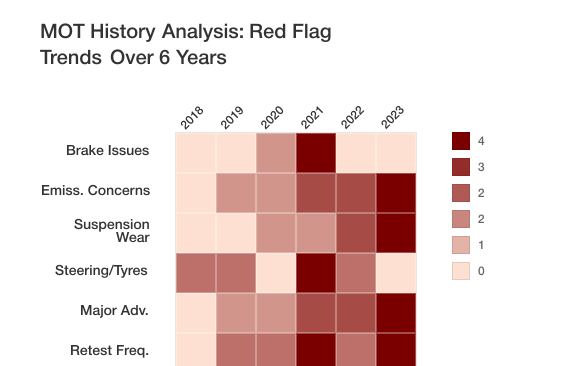
Moving beyond a simple pass or fail, the true power of an MOT history lies in its narrative—the story it tells about a vehicle's life. This approach requires shifting your perspective from a basic check to that of an investigator, seeking subtle patterns and inconsistencies that reveal underlying issues. The most valuable insights from an MOT history come not from a single test result, but from analyzing the trends and patterns over the vehicle's entire life.
Recurring Issues: Unresolved Faults
One of the clearest indicators of neglect or a persistent mechanical problem is the reappearance of the same advisory or failure across multiple MOTs. For example, if 'emissions system' or 'brake imbalance' repeatedly appears year after year, it suggests the root cause has never been properly addressed. These aren't isolated incidents but rather symptoms of an ongoing issue that the owner may have been deferring.
This pattern suggests poor maintenance or an ongoing mechanical issue (Research data). Such recurring failures can point to underlying systemic problems rather than minor wear and tear, potentially leading to expensive future repairs.
Note: Pay particular attention to failures on critical components. If a car has repeatedly failed on major issues like brake defects or structural corrosion, those problems could be ongoing (Proof anchor).
Advisory Neglect: The Unheeded Warnings
An MOT advisory isn't a failure, but a warning—a recommendation for future attention. A long list of advisories from a previous test, especially if they haven't been addressed by the subsequent MOT, speaks volumes about a vehicle's upkeep. This indicates a consistent pattern of poor maintenance, where owners are opting for the bare minimum to pass, rather than preventative care.
Unresolved advisories are a red flag for a cautious buyer, as they often escalate into failures or costly repairs down the line. A long list of unresolved advisories shows that a car is being neglected (Proof anchor).
Corrosion Warnings: Structural Integrity at Risk
Any mention of rust or corrosion in an MOT history demands immediate attention, particularly if it's noted on or near structural components, suspension mounting points, or brake lines. These aren't cosmetic issues; they directly compromise vehicle safety and can be incredibly expensive to rectify, often requiring specialist welding and fabrication.
Rust and structural damage can compromise safety and be expensive to repair (Research data). Even seemingly minor corrosion can hide significant structural weaknesses beneath the surface. For instance, a Reddit user highlighted their concern about severe corrosion on a car with a "clean" history, emphasizing this as a key fear for buyers.
Mileage Discrepancies: Signs of 'Clocking'
A vehicle's mileage should show a steady, logical progression over time. Any sudden drops, very low mileage recorded between tests, or significant gaps without a plausible explanation (like a documented period of being declared off-road or SORN) are major warning signs. These anomalies can strongly indicate odometer tampering, commonly known as 'clocking'.
Checking MOT history can verify mileage, as 'clocking' is still a risk with some cars (Proof anchor). Anomalies in recorded mileage could indicate odometer tampering (Research data), making a vehicle appear less used and therefore more valuable than it truly is.
Gaps in History: What's Being Hidden?
A continuous MOT history provides reassurance. Therefore, a missing year or significant gap in MOT tests needs a credible explanation. Was the vehicle genuinely declared SORN (Statutory Off Road Notification) during this period, or is there a reason for the missing data that could imply hidden issues or significant repairs performed without proper oversight?
Always investigate these gaps. A lack of documentation for periods off-road can obscure major incidents, such as accidents or extensive repair work, that might not be recorded elsewhere.
By adopting an investigator's mindset, you move beyond surface-level data to uncover the deeper story of a vehicle's condition and history, empowering you to make a truly informed purchase decision.
Beyond the MOT: What the Official Check Doesn't Tell You
The MOT test is a cornerstone of UK road safety, providing a snapshot of a vehicle's compliance with environmental and safety standards. However, relying solely on a clean MOT certificate can leave crucial gaps in understanding a car's true condition. It's vital to recognise the MOT's specific purpose and its limited scope.

The MOT is primarily a point-in-time safety inspection. It assesses components critical for safe operation and environmental impact, such as lights, tyres, brakes, suspension, and emissions. Crucially, it does not evaluate the overall mechanical health, like the engine, clutch, or gearbox. Research from the DVSA confirms the test focuses on safety and environmental aspects, not the intricate mechanics dictating long-term reliability. A car can pass its MOT with a legal exhaust, yet have an engine struggling with oil consumption—a detail the test doesn't capture.
Therefore, a clean MOT is not a substitute for a comprehensive service history. Cross-reference the mileage on the MOT certificate with service stamps and receipts. This verifies mileage authenticity and confirms routine maintenance, crucial for longevity. A consistent service record provides a clearer picture of how well a car has been maintained beyond basic roadworthiness.
Beyond mechanical issues, a standard MOT check also omits critical legal and financial background information. It will not inform you about outstanding finance, previous write-off accidents, or if the car has been reported stolen. To uncover these vital details, a separate, dedicated vehicle history check—like an HPI check—is indispensable. Services such as HPI Check are designed to reveal this deeper history, safeguarding you from potential legal or financial complications, as industry analysis highlights.
Finally, while the system strives for integrity, 'dodgy MOTs' are a possibility. Anecdotal evidence, such as a Redditor's concern about "dodgy MOT shops who pass bad cars after receiving a bribe," suggests unethical practices, though rare, can occur. This reinforces why a single MOT pass, without a robust history, should be viewed cautiously. Always check for outstanding manufacturer safety recalls via the DVSA Recall Checker, as these are not part of a standard MOT.
Note: Even a car with a current MOT pass might have repeatedly failed on major issues in the past. These underlying problems could resurface, making a complete history review crucial for predicting future reliability.
A complete vehicle assessment requires combining the MOT history with service records and a full vehicle data check to see the entire picture.
Special Cases: Checking the MOT History of Classic and Historic Cars

The world of classic and historic vehicles often operates under different rules, particularly concerning the MOT. In the UK, vehicles typically become exempt from needing an annual MOT once they are over 40 years old. This exemption isn't automatic; the vehicle must be registered as historic with the DVLA to qualify (Proof Anchor, 2024).
Crucially, this exemption has a condition: it only applies if the vehicle has not been 'substantially changed' or heavily modified in the last 30 years (Research Data, 2024). Modifications such as engine swaps, significant suspension alterations, or brake system upgrades can void the exemption, requiring the vehicle to undergo an MOT despite its age.
Even for exempt vehicles, the pre-exemption MOT history remains an invaluable resource. The GOV.UK checker displays the full MOT history, including any tests performed before the vehicle became exempt (Proof Anchor, 2024). This historical data provides critical insights for buyers into:
- Past Maintenance Trends: Recurring advisories can highlight common weaknesses or neglect.
- Structural Integrity: Consistent notes on corrosion, especially in specific areas, can reveal long-term issues.
- Authenticity: The mileage record helps corroborate the car's documented history.
Accessing this pre-exemption history is a vital step in understanding the true condition and authenticity of a classic car before purchase.
For classic vehicles, the pre-exemption MOT history is a critical window into the car's past maintenance, structural integrity, and authenticity.
From Data to Decision: Your Actionable Checklist
Armed with the ability to properly interpret an MOT history, you gain a powerful tool for avoiding bad deals and buying a reliable used car. This comprehensive checklist provides clear, actionable steps to transform data into confident purchasing decisions.
Start with the Basics
Always begin with the free GOV.UK MOT history check. This initial step is non-negotiable for any prospective used vehicle. Indeed, for buyers, this crucial check should happen before any money changes hands, establishing a foundation of transparency.Analyze for Patterns
Dive deep into the full MOT history. Look beyond simple passes or failures to identify recurring faults, neglected advisories (e.g., persistent tyre wear, brake issues), and corrosion warnings. Also, pay close attention to mileage inconsistencies; these can signal tampering. Digging deeper into past test results can truly uncover hidden issues.Contextualize the Data
The MOT report isn't a standalone document. Combine it with the vehicle's service history to see if advisories were actually addressed. Supplement this with a paid vehicle data check for crucial details like outstanding finance, write-off status, or previous ownership disputes.Trust, Then Verify
Use the MOT history to guide your physical inspection of the car. If advisories mention specific issues like corroded brake lines or worn suspension components, focus your attention on those areas. Don't just trust the report; verify its implications on the actual vehicle. These advisories can also help negotiate a better deal if issues remain unaddressed.Get Expert Opinion
A professional pre-purchase inspection is a small investment that can prevent a very costly mistake. If the MOT history raises concerns, or if you're simply unsure about the vehicle's overall condition, an independent mechanic's assessment offers invaluable clarity and confidence.
Following these systematic steps empowers you to move from simply viewing data to making an informed, confident purchase, safeguarding your investment. Your diligence with MOT history is the ultimate shield, providing genuine peace of mind in your used car journey. To aid your diligence, consider using an MOT analysis tool like ChatMOT to simplify the data.
Frequently Asked Questions
Uncertainties often arise when exploring a vehicle's past. This FAQ section addresses common queries, providing direct answers to empower your purchasing decisions.
How far back does the online MOT history go?
The official GOV.UK service offers MOT test results for cars, motorcycles, and vans since 2005 (Research Data). This provides visibility into nearly two decades of inspection history, specifically for tests performed in England, Scotland, or Wales.
Can a car with a clean MOT still have serious problems?
Yes, a clean MOT is not a guarantee. An MOT is an annual inspection for minimum road safety and environmental standards, not a full mechanical health check (Research Data). Tests usually last 45-60 minutes; hidden issues or poor past maintenance can exist despite a pass.
What if there's a gap of a year or more in the MOT history?
Such a gap often indicates the vehicle was legitimately declared SORN (Statutory Off Road Notification) and off public roads (Research Data). Always investigate these gaps. A seller's credible explanation is crucial, as unexplained periods might suggest mileage alterations or concealed problems.
Is it worth paying for a third-party MOT check?
Generally, no. Most third-party services simply repackage free data from the GOV.UK database (Research Data). Instead, invest in a comprehensive full vehicle history check. This offers superior value, covering finance, accident damage, write-off status, and mileage discrepancies for deeper insights.
Understanding these key questions equips you to make vehicle purchases with greater assurance.
You’ve now moved beyond the surface-level assessment of a current MOT certificate. Understanding a vehicle’s full MOT history is not just about confirming its legality; it’s about decoding its past to predict its future reliability and uncover potential hidden costs. This deeper dive empowers you to make truly informed purchasing decisions, mitigating risks that a basic check simply overlooks.
Here are the key takeaways from our guide:
- The free GOV.UK MOT history check is an indispensable starting point, offering a wealth of official data. However, its true value is unlocked through careful interpretation of every detail, ensuring you don't miss crucial warning signs.
- Decoding defect categories—from Dangerous to Minor, alongside advisories—is fundamental. This forensic approach allows you to identify recurring issues, track repairs, and anticipate future maintenance needs, transforming raw data into actionable intelligence.
- By adopting an investigator's mindset, meticulously analysing mileage consistency and scrutinising patterns of past failures or advisories, you gain the power to spot critical red flags, verify a vehicle's true condition, and avoid costly purchasing mistakes.
This comprehensive analysis isn't merely about avoiding bad buys; it's about making a purchase with genuine peace of mind, confident in your understanding of the vehicle's true health and history.
The next time you're evaluating a used car, commit to this thorough investigative approach. Always utilise the official MOT history to its fullest potential, extracting every insight possible. For an even more streamlined process, leveraging advanced analytical tools like ChatMOT that translate complex data into clear, actionable intelligence can significantly enhance your decision-making, offering comprehensive comparisons and risk assessments instantly.
Tags
Related Articles

Beyond Sunscreen: A Practical Guide to Sun-Protective Clothing

How to Choose the Right Plastic Surgeon in Korea: A Guide for International Patients